



Advanced Options Built Around Your Vision Goals
At Singh Eye, Dr. Ashish Singh helps guide you through your entire cataract surgery journey, offering a full range of Advanced Technology IOLs so your outcome is built around your eyes, your prescription, and your lifestyle.
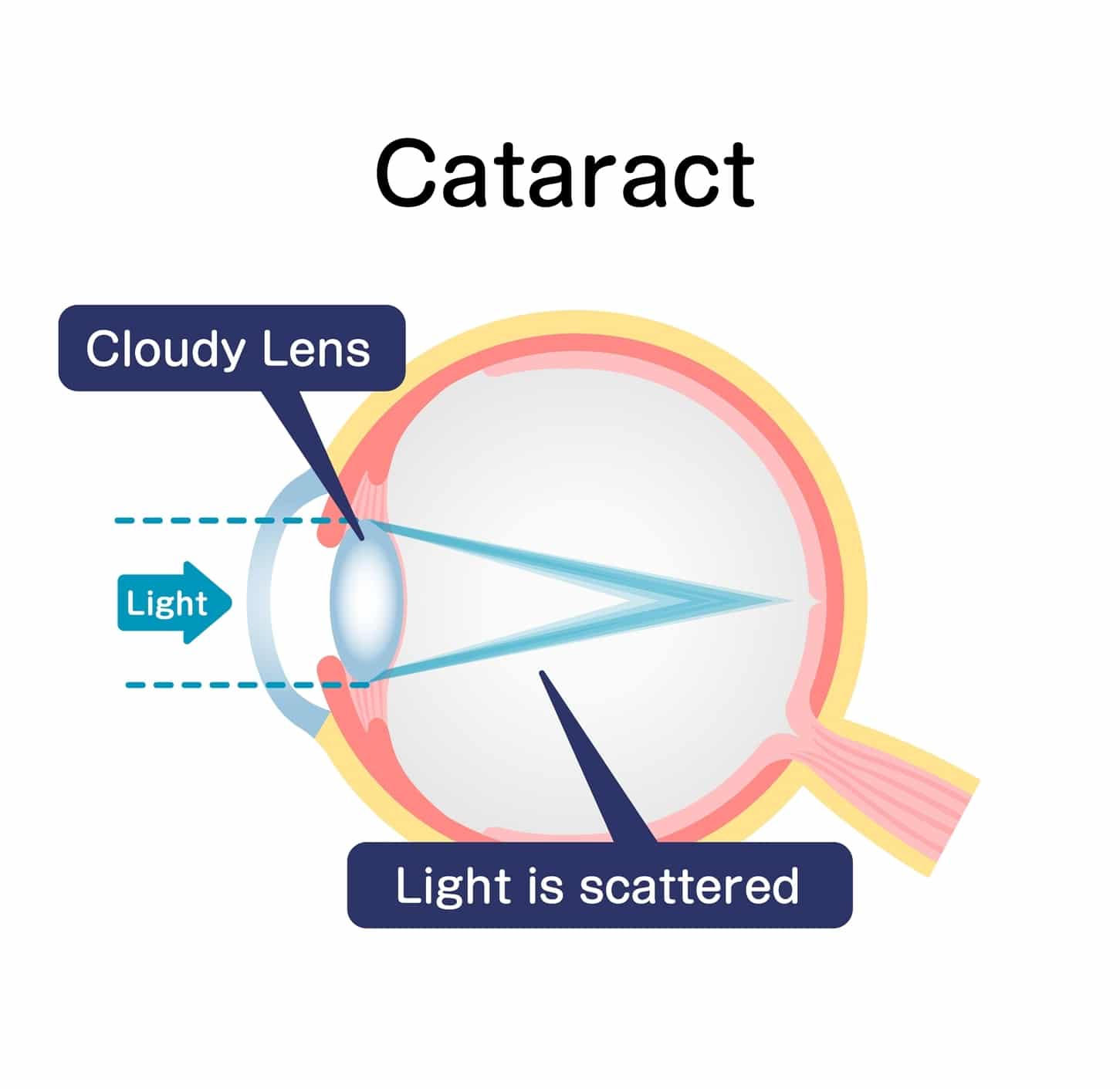
What Is a Cataract?
A cataract is a clouding of the eye’s natural lens, the structure that focuses light onto the retina to produce clear vision.
Cataracts develop slowly, most often as a natural part of aging, though they can also result from injury, certain medications, or medical conditions such as diabetes. As the lens clouds, light entering the eye becomes scattered rather than sharply focused, causing vision to gradually appear blurry, dim, hazy, or washed out.
Cataracts cannot be reversed with drops or medication. Cataract surgery is the only effective treatment and remains one of the safest and most reliably successful procedures in modern medicine.
What Is Cataract Surgery?
Cataract surgery removes the eye’s clouded natural lens and replaces it with an artificial lens called an intraocular lens (IOL). The procedure is performed on an outpatient basis and is done with numbing drops and light sedation rather than general anesthesia.
Dr. Singh offers femtosecond laser-assisted cataract surgery, using image-guided precision for key steps of the procedure. The clouded lens is gently broken apart and removed through a small, self-sealing incision, and your new IOL is placed in the same capsular bag your natural lens occupied, where it remains permanently.
Signs It Might Be Time for Cataract Surgery
Cataracts develop gradually, so many patients don’t realize how much their vision has changed until it starts interfering with everyday life. Rather than a specific age or prescription, it’s usually a combination of the signs below that signals it’s time for an evaluation.






If any of these signs sound familiar, a comprehensive evaluation with Dr. Singh will confirm whether cataracts are present, assess the overall health of your eyes, and determine the right timing and lens strategy for your vision goals. He will walk you through your options carefully, so you feel confident in your decision before moving forward.
Advanced Technology IOL Options
The intraocular lens you choose is the single biggest factor in your visual outcome after cataract surgery.
Dr. Singh works with multiple lens platforms and offers a full range of Advanced Technology IOLs, so your lens is selected based on your prescription, your eye health, and how you use your vision every day.

Multifocal IOLs
Designed to provide a full range of vision, near, intermediate, and distance, multifocal IOLs offer the greatest opportunity for independence from glasses across most daily activities.
Due to the IOL design, some patients may notice a halo or ring around lights, particularly at nighttime.

EDOF IOLs
Extended Depth of Focus (EDOF) IOLs deliver a smooth, continuous range of distance and intermediate vision with excellent visual quality, making them a strong option for patients with active lifestyles.
Because EDOF lenses do not provide a full range of vision, patients need a light pair of reading glasses for very small print. The design of this IOL typically results in minimal to no haloes around lights at night.

Light Adjustable Lens
The only IOL that can be fine-tuned after surgery. Once your eye has healed, your vision is customized through a series of painless light treatments until your prescription is tailored to your goals and preferences.
The light adjustable lens is a wonderful choice for patients with prior refractive surgery, such as LASIK/PRK/RK, where the lens calculations are inherently less accurate due to altered corneal anatomy.

Toric IOLs
Designed to correct astigmatism directly within the lens, toric IOLs provide sharper, clearer distance vision for patients whose corneas are not perfectly round.
Because toric IOLs are monofocal lenses, reading glasses are required for intermediate and near activities.

Standard Monofocal IOLs
A reliable, well-established option that provides excellent, clear vision. Since this is not an Advanced Technology IOL, patients typically require prescription glasses to see clearly at all distances.
During your consultation, Dr. Singh will take detailed measurements of your eyes and discuss each option with you to help you choose the lens that best matches your vision goals and lifestyle.
Why Choose Singh Eye for Cataract Surgery
At Singh Eye, we take pride in using the best technology for diagnostic testing to obtain precise, accurate measurements for cataract surgery. Combining this with access to a full spectrum of advanced technology IOLs, Dr. Singh can recommend which IOL is best for your eyes and your lifestyle.
Recovery After Cataract Surgery
Most people are back to their normal routine within a day or two after cataract surgery. It’s common to notice a significant improvement in clarity within 24 hours, though your vision will keep settling in and getting sharper over the next few weeks as your eye fully adjusts to the new lens. Plan ahead for a ride home the day of surgery, since you won’t be able to drive yourself. Dr. Singh will want to see you in the office the next morning to make sure your eye is doing well.
You’ll be given eye drops to use for a few weeks to help the eye heal. For one week, keep water out of the eye, avoid eye rubbing, and hold off on strenuous exercise or heavy lifting. A little scratchiness, glare, or sensitivity to light in the first few days is completely normal and settles down on its own as the eye heals.
Frequently Asked Questions
Ready to See Clearly Again?
If cataracts are affecting your daily life, schedule a consultation with Dr. Singh to learn whether it might be time for cataract surgery!